From Research to Action: How Biogardens Are Transforming Wastewater Solutions in Nosara

Dr. Vanessa Bézy reflects on WCA’s fifth biogarden, the science behind nature-based wastewater treatment, and why community participation is essential for long-term change
What does the milestone of building WCA’s fifth biogarden represent from a scientific and organizational perspective?
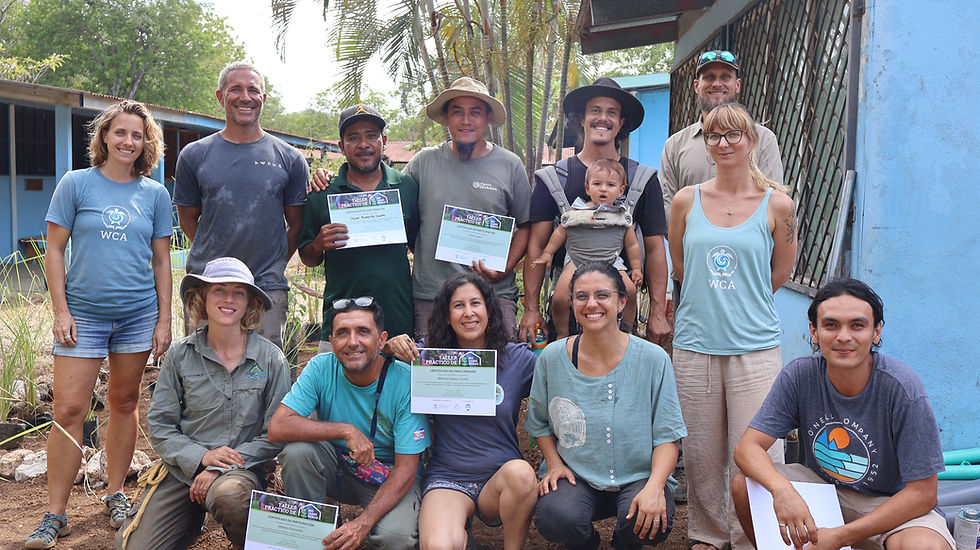
The installation of our fifth biogarden is both exciting and symbolic. It shows that this nature-based solution is gaining real traction in our community. With this installation, we are able to provide safe sanitation to a school serving 545 students and teachers, while also training 8 local contractors and continuing to raise awareness about alternative ways to treat wastewater.
From an organizational perspective, this milestone reflects years of research, community engagement, and collaboration. From a scientific perspective, it shows that we are not only studying environmental problems, but also helping implement and test practical solutions that respond to them.
From a practical perspective, what are the main challenges of implementing nature-based wastewater solutions like biogardens in places like Nosara?
The biggest challenges in places like Nosara are the environmental and practical constraints of the landscape. Many areas have a high water table, are located in flood zones, or have limited available space for wastewater treatment systems. Budget is also a major consideration, especially for families, schools, or businesses trying to improve sanitation in a cost-effective way.
That is why nature-based solutions must be carefully adapted to local conditions. A biogarden is not a one-size-fits-all wastewater solution. To work well, solutions have to be designed around the realities of the site, the volume of water being used, and the needs and limitations of the people who will maintain it.

In your view, how do biogardens connect to the broader ecosystem, from groundwater systems to coastal and marine environments?
Biogardens help connect wastewater treatment to the health of the larger ecosystem. They reduce contaminants before they can move into groundwater, rivers, and eventually the ocean, while also creating a green space that remains productive and attractive year-round.
That means they do more than treat wastewater. They help protect water quality, reduce erosion, and create habitat for pollinators such as bees and butterflies. In that sense, they transform a negative environmental impact into a positive one by turning wastewater treatment into an opportunity to support biodiversity and ecosystem health.
What are the key variables or site-specific factors that must be considered when designing an effective biogarden?
One of the most important factors is making sure the wastewater passes first through a properly sized and regularly maintained grease trap and septic tank, which separate solids from kitchen and toilet water before it reaches the biogarden. The system must also be sized to handle the maximum daily volume of water used at the site.
Space is another key variable. Although biogardens generally require much less area than a traditional septic drainfield, they still need enough room to function well. Sunlight is also important for plant growth, and in places with a high water table or flood risk, the biogarden needs to be elevated and requires a pump. In short, good design depends on understanding both the physical site and how water is actually used there.
How does scientific research on water quality translate into concrete action and decision-making in the implementation of biogardens?
Our water quality research helps us identify where there is a problem, what may be causing it, and what kinds of solutions are needed. By measuring fecal bacteria in the ocean, we found clear evidence of contamination, particularly after heavy rainfall. DNA analysis further showed that a significant portion of that contamination came from human sources (sewage), which presents a public health risk.
That research gave us a starting point, but science alone is not enough. We then spoke directly with community members, going door to door to better understand the wastewater challenges they face and what kinds of solutions might be realistic. Ongoing monitoring of biogardens has shown that they are one promising option, helping convert wastewater into a beautiful green space while removing more than 90% of pollutants compared to traditional septic systems.
How does science integrate with other disciplines—such as architecture, engineering, and construction—in the implementation of biogardens?
Biogardens are a great example of why interdisciplinary collaboration matters. Architects help design the space, engineers make sure the system functions properly, builders bring it to life, and biologists evaluate whether it is actually treating wastewater effectively.
Each discipline brings something essential. These systems only succeed when they are practical, technically sound, visually appropriate, and scientifically effective.

How can small-scale interventions like biogardens contribute to larger environmental outcomes at the ecosystem level?
Each biogarden may seem small on its own, but every installation helps reduce the contaminants entering local soils, groundwater, streams, and rivers. Those pollutants do not stay in one place. They move through the watershed and can eventually affect estuaries and the ocean.
That means small-scale interventions can add up to meaningful ecosystem-level change, especially when they are implemented across multiple homes, schools, businesses, and communities. Over time, these local improvements can contribute to healthier waterways, healthier coastal ecosystems, and reduced risks to both people and wildlife.
Why is community involvement essential for the long-term sustainability and scalability of biogardens?
Community involvement is essential because the solutions we propose have to make sense in the real world. Every family, business, school, or hotel has its own way of using water, managing wastewater, and navigating physical or financial limitations. Without listening to the community, the solutions we offer may not be practical, affordable, or culturally appropriate.
When people are involved in shaping the solution, the result is stronger and more lasting. Community participation helps ensure that these systems are adapted to local realities, and it also builds the knowledge, trust, and ownership needed for biogardens to grow at a larger scale.
Whether you're curious about how BioGardens work, wondering if this system is right for your home or project, or feeling inspired to implement one yourself, we’re here to support you every step of the way.
This is a collective effort, one that thrives on shared knowledge, collaboration, and a genuine desire to create positive impact.
If you're interested in learning more, exploring possibilities, or bringing a BioGarden into your space, we’d love to hear from you. Reach out to us at info@wcanosara.org and let’s grow something meaningful together.


Comments